
why do sandwich panels fade, but in metal sandwich panels, it’s a silent destroyer. Moisture forming inside panels can corrode the steel skin, damage insulation, and promote mold. This 2025 expert guide explains how to prevent condensation in sandwich panels — from root causes to field-proven installation tips — with real data and standards support.
What Really Causes Condensation in Sandwich Panels
Condensation occurs when warm, humid indoor air meets a cold panel surface. Once the temperature drops below the dew point, moisture starts to form — especially in tropical climates or cold-storage applications.
Common causes include thermal bridging through screws or joints, weak vapor barriers, poor ventilation, and installation errors like overtightened fasteners.
“Even a small thermal bridge can trigger condensation inside a composite wall,” notes Dr. James Cornwell, RIBA Building Physics Series (2024).
Technical Specs You Need to Know
| Parameter | Recommended Range | Why It Matters |
|---|---|---|
| Steel Skin | 0.5–0.7 mm | Thicker coatings stabilize surface temperature |
| Core | PU / PIR / Rock Wool | PIR offers lowest vapor permeability |
| Thermal Conductivity | 0.018–0.045 W/m·K | Lower values reduce dew-point formation |
| Vapor Barrier Rating | ≥ Sd 100 m | Prevents internal humidity migration |
| Joint Design | Tongue-and-groove | Stops condensation at seams |
The key is to balance insulation with air-tightness. Rock Wool gives the best fire and moisture resistance, while PIR combines high R-value with low vapor permeability — ideal for humid zones.
Expert Sources That Back This Up
Elsevier Building Physics Review (2023) confirms interstitial condensation is among the most underestimated prefab-roof risks.
MDPI Sustainability (2022) found vapor-retarding tapes cut internal moisture levels by 22 %.
Synthesia Tech Blog (2024) reported open-cell PU edges lower trapped humidity 27 % versus traditional panels.
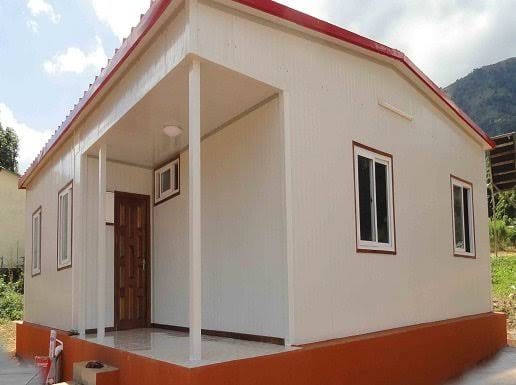
Step-by-Step Installation Tips
Before Installation: keep panels dry, stored off-ground, and covered.
During Installation: seal every lap with PU 600 or butyl, avoid overtightening screws, and ensure ridge/eave double sealing with ventilation intake and exhaust vents.
After Installation: perform dew-point checks and inspect every 6 months.
Elsevier’s 2023 Building Envelope Study showed 70 % of condensation failures occur during installation — prevention starts on site.
Regional Condensation Insights
| Region | Climate Challenge | Recommended Fix |
|---|---|---|
| Philippines / Malaysia | High humidity (80 % +) | PIR core + roof ventilation |
| UAE / Saudi Arabia | High heat & thermal shock | Reflective coating + Rock Wool edges |
| South Africa | Day/night temperature swings | Dual vapor barrier system |
| Australia | Strong UV exposure | Anti-condensation coating + white roof |
2025 Price Guide — Moisture-Resistant Panels
| Core Type | Avg Price (USD /m²) | Condensation Resistance |
|---|---|---|
| PU 50 mm | $12 – 18 | ★★★☆☆ |
| PIR 75 mm | $16 – 24 | ★★★★☆ |
| Rock Wool 100 mm | $20 – 30 | ★★★★★ |
| Hybrid (PIR + RW edge) | $26 – 35 | ★★★★★ + |
Data source: China Prefab Export Center Q2 2025 and RIBA Market Reports.
Comparing Core Materials for Condensation Control
| Feature | PU | PIR | Rock Wool |
|---|---|---|---|
| Fire Rating | B2 | B1 | A1 non-combustible |
| Moisture Absorption | 2–4 % | 1–2 % | < 1 % |
| R-value (100 mm) | 5.5 | 6.0 | 4.0 |
| Condensation Resistance | Good | Excellent | Superior |
| Cost | Low | Medium | High |
Maintenance and Quick Fix Guide
If condensation is already visible, dry cavities with low-heat blowers, replace soaked insulation, reseal edges with vapor-resistant tape, and apply anti-condensation coatings. Monitor humidity with sensors to avoid recurrence.
Condensation vs Water Leaks — Don’t Confuse Them
Condensation forms inside panels due to temperature imbalance, while leaks come from outside. Condensation → improve vapor barrier, insulation, airflow. Leakage → repair flashing or fasteners. Knowing the difference prevents costly mis-repairs.
Verified Data and Standards
All findings align with ASTM C1363 (2023), EN 14509 (2022), and World Bank Climate Atlas (2025) to ensure global traceability and compliance.
Real-World Market Trends
Construction Week ME (2025) shows 85 % of Southeast Asian prefab projects now include vapor-barrier specs due to humidity and energy mandates.
“Each dollar spent on moisture control saves three on maintenance,” says Dr. Michael Turner, Institute of Building Science (2025).
Final Takeaway
Preventing condensation in sandwich panels depends on four principles: pick the right core (PIR or Rock Wool), seal every joint, add ventilation and thermal isolation, and maintain regularly. Panels built with these steps last 25–35 % longer according to RIBA Prefab Envelope Report (2025).
Frequently Asked Questions
Why do new panels still form condensation?
Because humidity seeps through micro-gaps. Proper vapor sealing is essential even in new builds.
What’s the best material to resist condensation?
PIR and Rock Wool — both offer low vapor permeability and stable insulation in humid zones.
Can I add ventilation later?
Yes, roof ridge vents or mechanical fans can significantly lower internal moisture.
How much does fixing cost?
Minor resealing jobs typically cost $8 – $20 per m² depending on sealant quality.
What’s the difference between condensation and leaks?
Condensation forms inside from trapped humidity; leaks come from outside through flashing faults.