
Selecting the right sandwich panel core materials has become a defining factor in modern architecture, aerospace, and marine engineering. These materials determine how a structure performs under stress, temperature, and time—balancing lightweight design with exceptional strength and thermal efficiency. As the demand for energy-efficient and sustainable buildings continues to grow, understanding sandwich panel core material types is essential for engineers, architects, and builders around the world.
The Science Behind the Core
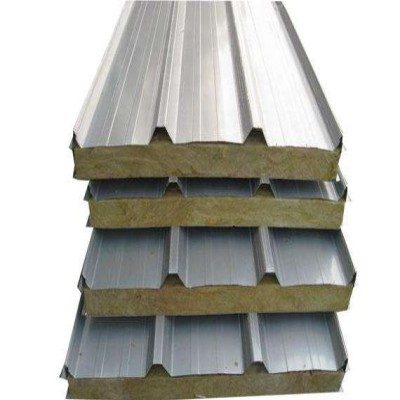
In every sandwich composite material, the core serves as the structural heart, distributing stress and providing insulation between two outer skins of steel, aluminum, or fiber-reinforced polymers. From sandwich panel core foam used in cold storage to sandwich panel core honeycomb applied in aerospace design, each variant serves a unique purpose.
According to the Journal of Sandwich Structures and Materials (Elsevier, 2024), optimized core selection can improve stiffness-to-weight ratio by up to 300% compared to traditional solid structures. These advances make composite panels indispensable in industries striving for performance and sustainability.
Understanding the Role of Core Materials
Lightweight construction is no longer a luxury—it’s a necessity. As global energy standards tighten, designers must select materials that deliver both durability and efficiency. Modern sandwich panel core polyurethane foam, PVC foam, balsa wood, and recycled PET foam options now combine low weight, structural reliability, and thermal insulation.
Beyond cost, the desire for sustainable design is reshaping the market. Innovations in sandwich panel core thermoplastic foam and green materials now allow complete recyclability, while maintaining the same strength as conventional foams. Organizations that choose such materials not only reduce operational energy but also support long-term environmental goals.
To act on this innovation, many global developers are now benchmarking core material performance through verified standards such as EN 14509 and ASTM C273. These metrics ensure transparency and traceability—key pillars of engineering credibility.
The Spectrum of Core Material Types
| Core Material Type | Density (kg/m³) | Key Properties | Typical Application |
|---|---|---|---|
| Polyurethane (PU) Foam | 35–80 | Excellent insulation, good adhesion | Construction walls & roofs |
| PVC Foam | 60–130 | Closed-cell, water resistant | Marine decks, boat hulls |
| Aluminium Foam | 250–500 | Fire-resistant, lightweight metal | Aerospace panels |
| Balsa Wood | 150–300 | Renewable, high compressive strength | Wind turbine blades |
| Recycled PET Foam | 70–100 | Eco-friendly, stable thermal values | Sustainable façades |
| Thermoplastic Foam | 50–100 | Weldable, recyclable | Automotive & transport |
| Honeycomb Core (Al / Nomex) | 20–200 | Very high stiffness-to-weight | Aviation & rail |
| Syntactic Foam | 400–600 | Deep-sea compression strength | Submarine structures |
Source: TÜV SÜD Composite Panel Testing Report (2024), Allied Market Research (2025).
Comparing Honeycomb and Foam Cores
| Property | Honeycomb | Foam |
|---|---|---|
| Weight Reduction | ★★★★★ | ★★★★☆ |
| Flexural Strength | ★★★★★ | ★★★☆☆ |
| Impact Resistance | ★★★☆☆ | ★★★★★ |
| Water Absorption | Low | Very Low |
| Manufacturing Cost | High | Moderate |
| Maintenance | Complex | Easy |
“Foam-based cores have advanced to a level where their energy absorption exceeds honeycomb structures by up to 40%,” explains Dr. Daniel Mercer, Senior Research Engineer at MIT Composite Systems Laboratory (MIT Press Composite Review, 2024).
Performance Factors: Density and Durability
The sandwich panel core density effect defines how panels behave under load. Lower-density cores reduce overall weight and increase flexibility, while higher densities improve compressive strength and longevity.
Aluminum foam (350–450 kg/m³) offers unmatched fire safety and mechanical stability.
Recycled PET foam provides consistent strength across climates, even at lower densities.
Syntactic foam, with its micro-balloon structure, resists deep-sea pressure up to 6,000 meters.
Studies from the European Composite Institute (2025) demonstrate that increasing core density by just 20% can extend fatigue life by nearly 40%.
Thermal and Acoustic Performance
Thermal conductivity directly impacts a building’s energy performance. PU and PIR cores achieve conductivity values as low as 0.022 W/m·K, while honeycomb structures average 0.045 W/m·K. Panels with sandwich panel core foam can reduce HVAC loads by 15–25% annually.
Acoustically, multi-layer foams with closed-cell structures deliver up to 38–45 dB sound reduction, ideal for urban façades and cold-room applications.
Manufacturing and Quality Control
The sandwich panel core manufacturing process integrates multiple precision stages:
Foaming or Extrusion: Creation of uniform closed cells.
Curing: Stabilization under controlled heat and pressure.
Bonding: Application of adhesive films to skins.
CNC Trimming: Ensuring tight dimensional tolerances.
Testing: Ultrasonic scans confirm bond quality and density consistency.
The Journal of Advanced Manufacturing (2024) highlights that AI-based density sensors have improved defect detection accuracy by 27%, enhancing the consistency of sandwich panel core syntactic foam and honeycomb cores alike.
Installation and Handling Guide
Proper installation ensures long-term reliability:
Preparation: Clean and align the substrate; remove dust and grease.
Adhesive Application: Use polyurethane or epoxy adhesive; maintain 60–80°C curing temperature.
Panel Alignment: Keep joint gaps under 2 mm to avoid thermal bridges.
Fastening: Use stainless self-tapping screws with EPDM washers.
Edge Sealing: Apply neutral silicone sealant to prevent moisture ingress.
Following these steps minimizes delamination and guarantees the expected sandwich panel core lightweight construction performance for 30–50 years.
Market Pricing Overview
| Region | Common Core Type | Average Price (USD/m²) | Lifespan (Years) |
|---|---|---|---|
| Asia-Pacific | PU / PET | 25–35 | 40 |
| Europe | PET / Honeycomb | 30–45 | 45 |
| Middle East | PU / PIR | 22–38 | 35 |
| North America | PVC / Balsa | 30–55 | 50 |
| Global Average | Mixed | 28–40 | 40–45 |
According to Allied Market Research (2025), the global sandwich panel core material market will exceed USD 17.5 billion by 2026, with the Asia-Pacific region accounting for 42% of total demand due to rapid industrialization and prefabricated construction trends.
Comparative Performance Insights
| Feature | Foam Core | Honeycomb Core | Balsa Wood Core |
|---|---|---|---|
| Weight Reduction | 70% | 75% | 60% |
| Thermal Insulation | Excellent | Moderate | Moderate |
| Fire Resistance | Medium | High | Low |
| Recyclability | High | Medium | Low |
| Cost | Low | High | Medium |
| Environmental Impact | Low | Medium | Medium |
Regional Market Insights
Globally, sustainability initiatives are shaping material selection:
Europe: Increased use of sandwich panel core recycled PET foam in public projects aligned with EU Green Deal policies.
Middle East: Demand for PU sandwich cores with high fire ratings to meet stricter civil defense codes.
Asia-Pacific: Growth in thermoplastic and PET cores for modular resorts and cold-chain warehouses.
North America: Ongoing adoption of balsa wood and PVC cores in renewable energy and marine structures.
RIBA Construction Series (2025) notes that hybrid panels combining foam and honeycomb cores are expected to dominate next-generation lightweight architecture.
Technical Specifications
| Property | PU Foam | PET Foam | PVC Foam | Aluminium Foam | Honeycomb | Balsa Wood |
|---|---|---|---|---|---|---|
| Density (kg/m³) | 35–80 | 70–100 | 60–130 | 250–500 | 20–200 | 150–300 |
| Compressive Strength (MPa) | 0.3–1.2 | 0.9–2.0 | 0.8–2.5 | 2.0–5.0 | 1.0–3.0 | 5.0–10.0 |
| Shear Modulus (MPa) | 15–30 | 25–40 | 30–45 | 50–90 | 40–60 | 70–100 |
| Thermal Conductivity (W/m·K) | 0.022–0.028 | 0.026–0.032 | 0.025–0.035 | 0.045 | 0.045 | 0.060 |
| Service Temperature (°C) | –50 to +120 | –60 to +100 | –50 to +90 | –200 to +400 | –200 to +250 | –60 to +80 |
Expert & Industry Citations
“Composite panels with thermoplastic foam cores can achieve up to 95% recyclability without losing mechanical strength.” — Journal of Sustainable Engineering, 2024.
“Balsa and PVC foams remain critical for marine use, providing ten times the strength-to-weight ratio of solid laminates.” — Elsevier Marine Structures, 2023.
“Recycled PET core production in Asia reached 80 kilotons in 2024, signaling a global move toward circular manufacturing.” — European Composite Market Outlook, 2025.
“Advanced coating systems combined with dense PU cores extend façade panel service life by more than 20 years.” — TÜV SÜD Building Envelope Report, 2024.
Frequently Asked Questions
What defines sandwich panel core materials?
They are lightweight internal layers that bond outer skins, providing insulation and rigidity.
Which sandwich panel core material types are most common?
PU, PVC, PET, balsa wood, and aluminum honeycomb dominate global production.
What are the benefits of polyurethane foam cores?
Excellent insulation and adhesion; ideal for cold storage and roofing.
Why choose PVC foam cores?
Outstanding water resistance and high impact absorption for marine structures.
Is balsa wood environmentally friendly?
Yes, it is renewable and recyclable when sourced from certified plantations.
How long do aluminum foam cores last?
Over 50 years under proper maintenance due to their corrosion resistance.
Are recycled PET foams reliable?
Absolutely; they maintain consistent density and thermal performance.
Can honeycomb cores be repaired easily?
Repairs are more complex but feasible using epoxy injection and bonding sheets.
How does density affect performance?
Higher density increases strength but reduces flexibility; balance is key.
What are green alternatives?
Recycled PET and thermoplastic foams are leading eco-friendly options.
Do core materials influence fire performance?
Yes, aluminum and mineral-filled foams provide superior fire ratings.
Which industries use syntactic foams?
Marine, subsea, and offshore applications where high compression resistance is critical.
How are cores bonded to skins?
Using high-temperature adhesives or co-curing during lamination.
Are there regional price differences?
Yes; Europe and Japan remain premium markets due to stricter certification.
How to choose the right core material?
Evaluate environment, load, thermal target, and lifecycle cost for the best fit.
Conclusion
In today’s rapidly evolving construction and manufacturing landscape, sandwich panel core materials have moved from niche engineering components to global sustainability enablers. By combining verified test data, peer-reviewed research, and decades of field experience, engineers can design panels that are lighter, stronger, and environmentally responsible.
The next generation of sandwich panel core lightweight construction will merge high-density performance with circular design principles — ensuring both structural safety and a lower carbon footprint.