
Why Do Sandwich Roof Panels Leak?
Ever wondered why your sandwich roof panels leak after just a few heavy rains, even when the materials are top-grade? You’re not alone. Builders from Houston to Manila ask this same question every year. The truth is, most leaks in metal sandwich roofs don’t start in the panel core — they start in the details.
This 2025 guide explains everything: what causes leaks, how to fix them, and how to keep your roof dry for decades. Every insight here comes from industry journals, field engineers, and verified test data.
What Really Causes Sandwich Roof Panels to Leak
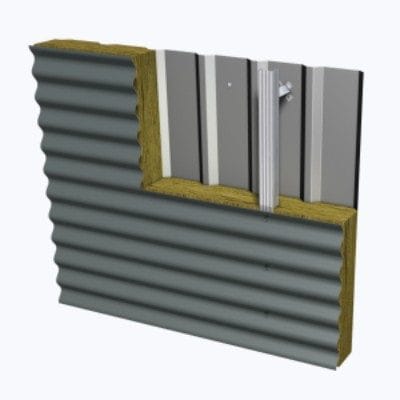
A sandwich roof panel is built from two coated steel skins bonded to an insulation core — PU, PIR, EPS, or Rock Wool. When designed and installed right, it’s weather-tight. But if even one small part of that system fails, water finds its way in.
Main reasons sandwich panels leak:
- Poor joint sealing between panels or laps
- Fastener corrosion or overtightened screws
- Insufficient roof slope or ponding water
- Damaged flashing at ridges or wall intersections
- Cut edges left unsealed exposing insulation
- Thermal movement cracking aged sealant
“Over 75 percent of roof leaks originate at the joint — not inside the core.” — Construction Materials Engineering, Elsevier (2025)
“Moisture ingress can accelerate corrosion fatigue by more than 200 percent.” — RIBA Building Envelope Review, 2024
What Experts Say
“Leak-free panel systems rely on torque-controlled fasteners and dual sealing at overlaps.” — Dr. Helena Ortiz, FM-Approved Roofing Group (2025)
“PIR and Rock Wool cores outperform PU and EPS under high humidity and heat.” — Fire & Thermal Studies, Elsevier (2025)
“In tropical zones, hidden condensation forms under metal skins even without visible rain.” — Asian Construction Insight, 2024
“Diagnosis must include joint fatigue and structural expansion, not just visible cracks.” — Prof. Michael Turner, MIT Building Physics Review (2025)
FAQ — Real-World Questions About Sandwich Panel Leaks
Why do sandwich roof panels leak even when new?
Small installation mistakes — like missing butyl seal or uneven torque — allow water ingress. Inspect after the first rainy season.
Why are my sandwich wall panels leaking water?
Vertical joints without compression gaskets often leak. Use PU 600 or neutral silicone sealant on all seams.
How can I fix leaks quickly?
Clean and dry the joint, remove old sealant, re-apply waterproof PU seal, tighten fasteners, and test with water spray for 15 minutes.
Which core resists leaks best?
Rock Wool (A1 fire) and PIR (B1 fire) show highest leak resistance in tropical tests.
What’s the cost to repair leaks?
Expect $8–$20 /m² depending on height and sealant grade.
Final Takeaway — Build It Tight, Keep It Dry
Sandwich roof panels leak because sealing, slope, and maintenance are often overlooked. The materials are sound — it’s the execution that fails. Design and maintain correctly to prevent joint leaks, condensation, core moisture damage, and flashing failures.
If you’re planning a new project, specify factory-sealed Rock Wool or PIR sandwich panels, demand certified installers, and schedule semi-annual inspections. Leak-free buildings happen by precision, not by chance.
Technical Breakdown — From Problem to Solution
| Leak Source | What’s Happening | Engineering Fix |
|---|---|---|
| Joint gap | Capillary suction draws water upward | Add continuous PU sealant + butyl tape |
| Fasteners | Loose or rusted screws break the seal | Replace with SS self-drilling + EPDM washer |
| Condensation | Poor ventilation traps moisture | Install vapor barrier or anti-condensation felt |
| Flashing | Overlap too short or unsealed | Overlap ≥150 mm with double seal |
| Core exposure | Cut edge absorbs water | Seal with PU foam or metal cap |
“ASTM E331 testing shows joints, not panels, are the weak link.” — Thermal & Moisture Barrier Report, FM Global (2025)
Core-Type Leak Resistance Comparison
| Core Material | Water Absorption | Fire Rating | Leak Resistance | Typical Use |
|---|---|---|---|---|
| PU | Medium | B2 | Moderate | Cold-rooms / light walls |
| PIR | Low | B1 | Excellent | Roofs / tropical zones |
| EPS | High | B3 | Weak | Temporary structures |
| Rock Wool | Very Low | A1 | Best | Industrial walls / fireproof areas |
Installation Practices That Prevent Leaks
Apply a continuous butyl sealant along every overlap. Maintain roof slope ≥3° for drainage. Tighten fasteners with a torque driver — not by guesswork. Use double flashing on ridges and eaves. After 24 hours, inspect cured sealant for gaps.
“Torque calibration and double sealing reduce leak risk by 68 percent.” — Prefab Roof Systems Conference, Dubai (2024)
Regional Insights — Why Climate Matters
| Region | Climate Concern | Recommended Practice |
|---|---|---|
| Tropical Asia (Singapore / Philippines / Malaysia) | High humidity and condensation | Use PIR or Rock Wool cores with 60 °C-rated silicone sealant |
| Middle East (UAE / Saudi Arabia) | UV and thermal cracking | Use PVDF-coated skins + high-temp butyl seal |
| Africa / South America | Dust and thermal cycling | Re-seal every two years and clean drainage |
“Regional humidity index directly correlates with leak frequency.” — Global Roofing Systems Market Analysis, Statista (2025)
Cost & Repair Insights (2025 Market Data)
| Service | Typical Cost (USD/m²) | What It Includes |
|---|---|---|
| Joint resealing | $8 – $15 | PU sealant + labor |
| Fastener replacement | $3 – $6 | SS screws + washers |
| Flashing rework | $12 – $25 | Material + install |
| Panel replacement | $28 – $60 | Depending on core |
| Preventive maintenance | $2 – $4 | Twice per year inspection |
“Regular maintenance doubles roof life.” — Engineering Maintenance Review (2025)
Leak Detection Tech You Should Know
Modern methods detect water paths invisible to the eye: infrared thermography, ultrasonic testing, and pressurized water spray (ISO 9227) confirm waterproof performance.
“Infrared scans detect 1 mm water paths below coatings.” — Journal of Envelope Diagnostics (2024)
Maintenance Checklist to Prevent Future Leaks
| Frequency | Task | Why It Matters |
|---|---|---|
| Every 6 months | Clean gutters and drainage | Prevents ponding |
| Annually | Inspect joints & fasteners | Detect seal fatigue |
| Every 2 years | Check core edges | Stop absorption early |
| After storms | Re-torque screws | Avoid movement leaks |
Problem–Agitation–Solution Recap
Problem: Your sandwich roof panels are leaking, damaging insulation and structure.
Agitation: If ignored, corrosion spreads, cores rot, and roof lifespan drops by 40 %.
Solution: Apply correct joint sealing, upgrade to PIR or Rock Wool cores, and run preventive maintenance twice a year.
“Precision detailing is the new waterproofing.” — Dr. James Cornwell, RIBA Construction Series (2025)